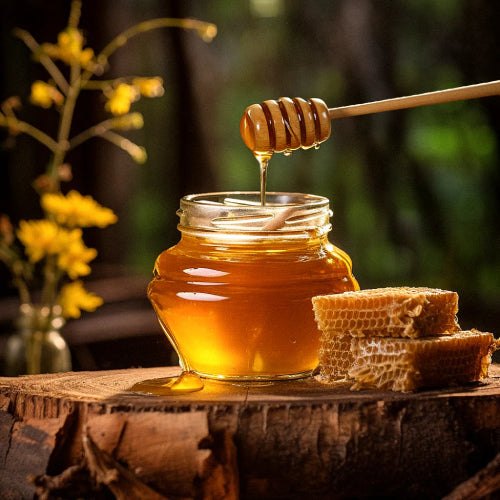
Honey has been called nature's liquid gold for as long as people have kept bees, and it is easy to see why. A jar of fresh honey is a record of a place and a season: the flowers that were in bloom, the weather that week, the altitude of the hives. As more of us look for food that has not been processed into anonymity, honey has quietly moved from the back of the cupboard to the centre of the kitchen.
What fresh actually means
Most supermarket honey has been heated to keep it liquid on the shelf and blended from many sources to keep it tasting the same all year. Both steps make honey easier to sell and less interesting to eat. Heating dulls the aromatic compounds that give a honey its character, and blending averages away the very differences that make a litchi honey taste of litchi.
Fresh, raw honey is extracted cold, strained only to remove wax and bee parts, and jarred. It will crystallise over time, and the colour will deepen slightly as it ages. Neither is a fault. Crystallisation is the surest sign that a honey has not been pasteurised, and a few minutes in a bowl of warm water will loosen it again.
Reading a jar
Colour tells you a lot. Pale, almost white honeys come from light blossoms such as litchi or acacia and taste delicate. Amber honeys usually come from mixed wildflowers and carry more caramel depth. Dark honeys, such as forest or buckwheat, are robust and almost savoury. Within a single flavour, a shift in colour from one season to the next is normal.
Aroma is the next clue. Hold the open jar a few centimetres from your nose. Eucalyptus honey announces itself immediately with a cool, herbal note; multiflora honeys smell of hay and warm sugar. If a honey smells of nothing at all, it has probably been heated.
How we use it at home
A spoon of eucalyptus honey in warm water is how most mornings start in our office. Litchi honey goes over fresh fruit and yoghurt, where its floral lightness is not overpowered. Multiflora is the everyday jar: toast, porridge, a glaze for roasted vegetables, a tablespoon stirred into a salad dressing in place of sugar.
Avoid cooking honey at high heat if you want to keep its aroma; add it at the end, off the flame. And store it closed, at room temperature, away from the window. A good honey keeps for years, but it is at its most expressive in the first twelve months.
Where ours comes from
Our honey is gathered in the Kangra Valley of Himachal Pradesh, from hives placed in litchi orchards, eucalyptus groves and the wildflower meadows above them. Each batch is lab-tested before it is jarred, and the report is linked from every product page. If you would like to see the hives for yourself, we welcome visitors; write to us and we will arrange it.